
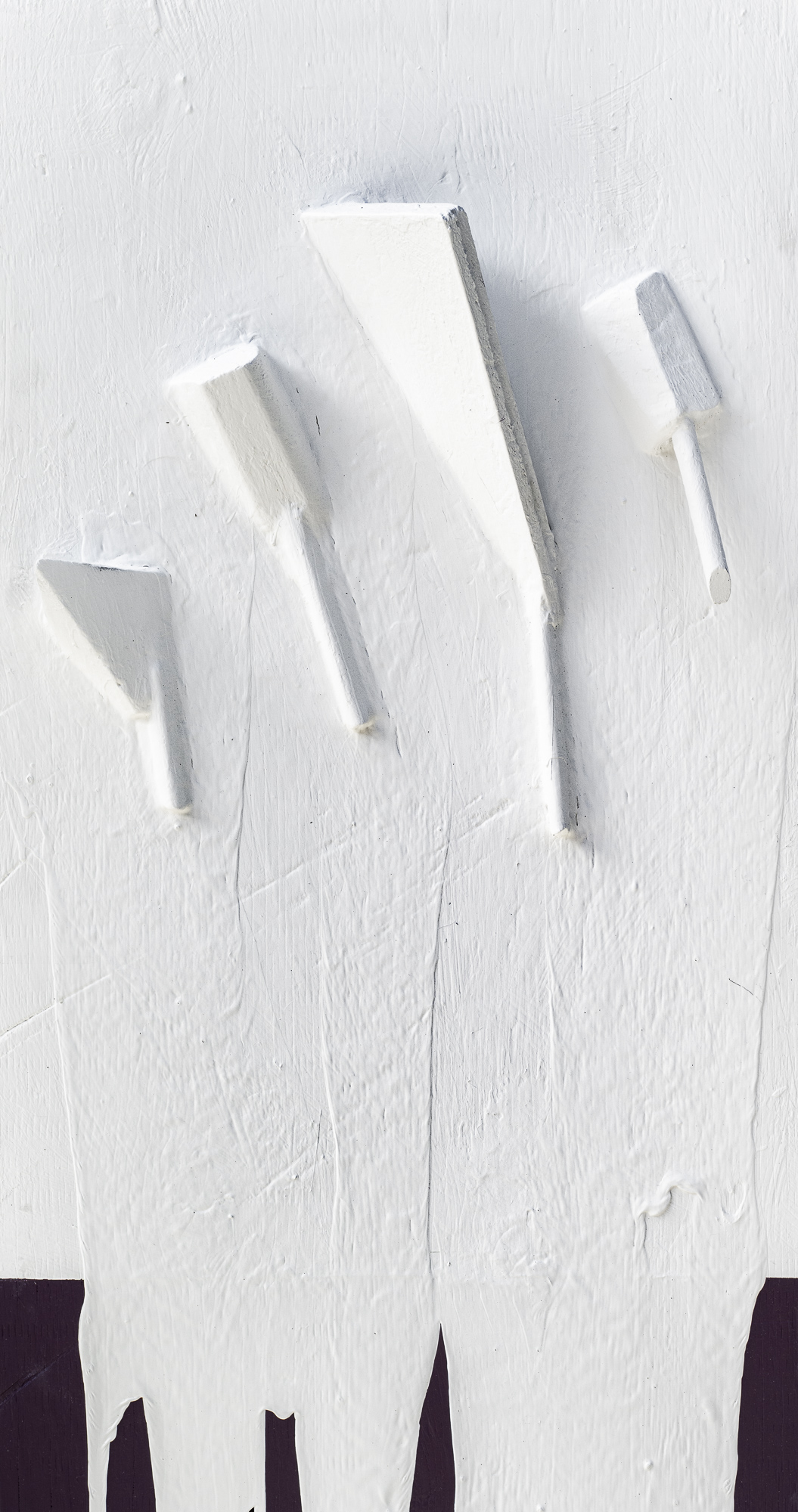
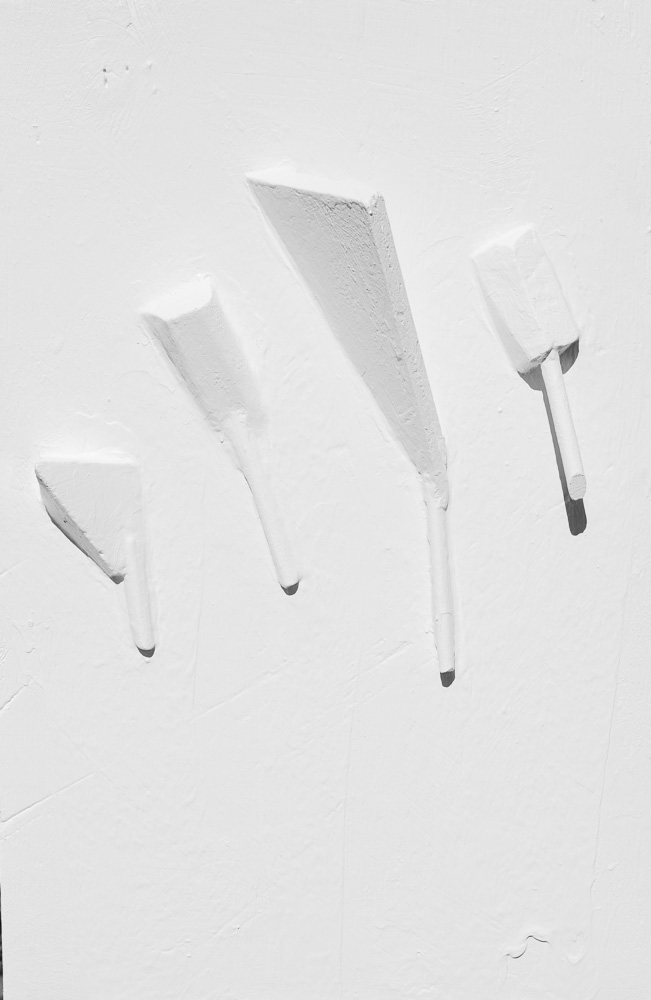
Title: Materialization of a hand
Author: Omar Reyna
Date: 2019
Place of production: Yukon, Canada
Materials: Wood, drywall, white and purple paint
Technique: Relief sculpture
Dimensions: 90cm by 1.5 m.
As a form of conclusion
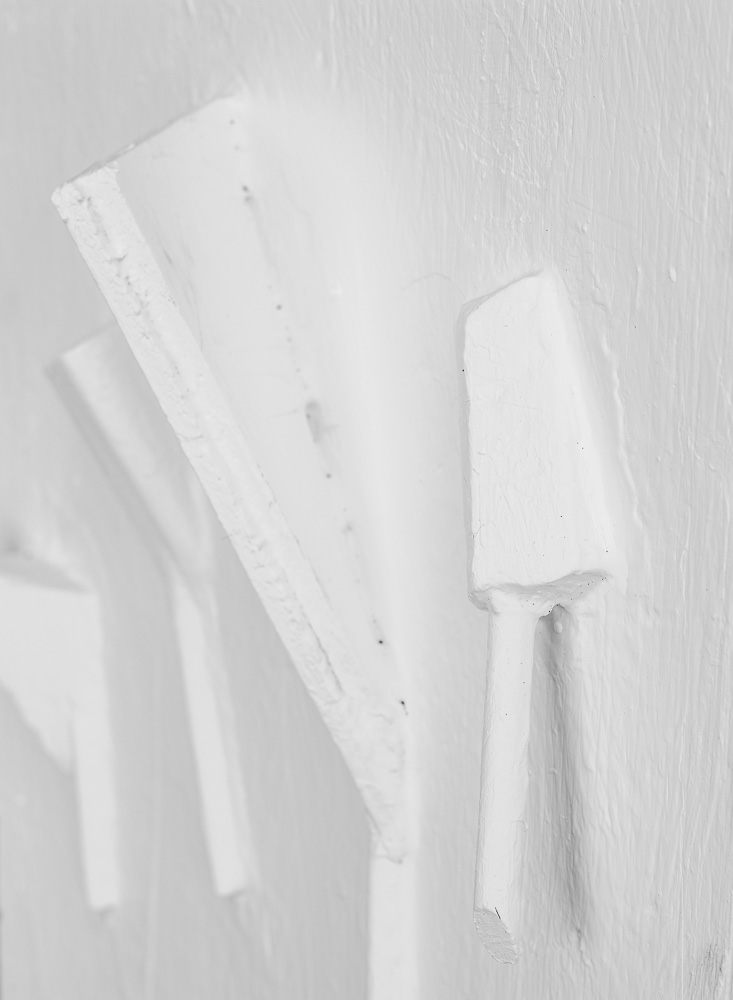
In the end, the photograph above shows which part of the lower section of the sculpture made it into the final. As I explained in the Coursework Part1, in the last two sections of the document, I was having doubts about what to do with the lower part of the wood board. I must admit that I haven’t made any physical cut to the sculpture to reduce its length documented in the photograph. This reminds me of the relationship David Smith has with photography and perhaps like him, my sculpture’s picture is not a neutral document but an independent image in its own right. (Hamill, 2015:2)
This project still has some future. I need to review it later during the course, to see what I’ll be able to do with the newly acquired knowledge. Or if I decide to let it be seen as is in its official photo. On the other hand, I feel very comfortable with the results of this sculpture. I think that it looks good I have a sense that I accomplished something like kind of a mini-break trough, generally speaking.
If I have to say who was the most significant influence of all the artists researched, I would say Vladimir Tatlin. I’m glad, Tatlin was one of my top 3 artists in the initial research.
Items include in this assignment
Relief sculpture documentation (Project 1)
Open-space construction documentation (Project 2)
Research (Part One of the course)
Relevant sketchbook pages (in this document)
Preparatory Drawings (in this document)
Tonal Drawings (in this document)
Self-assessment (in this document)
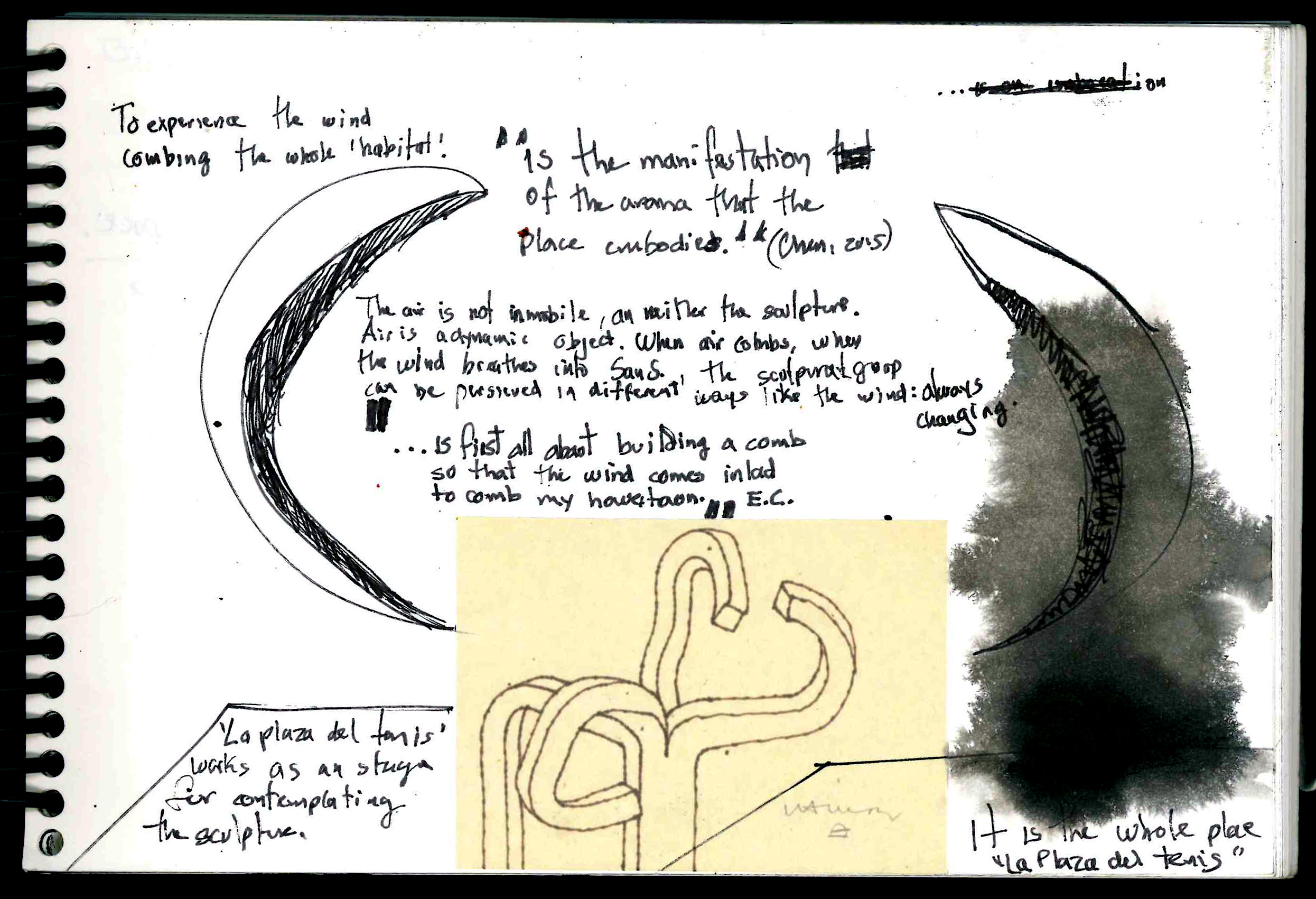
Relevant sketchbook pages
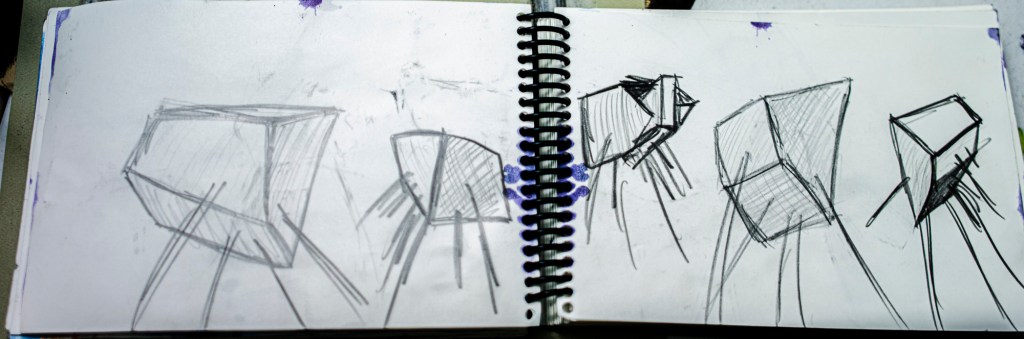
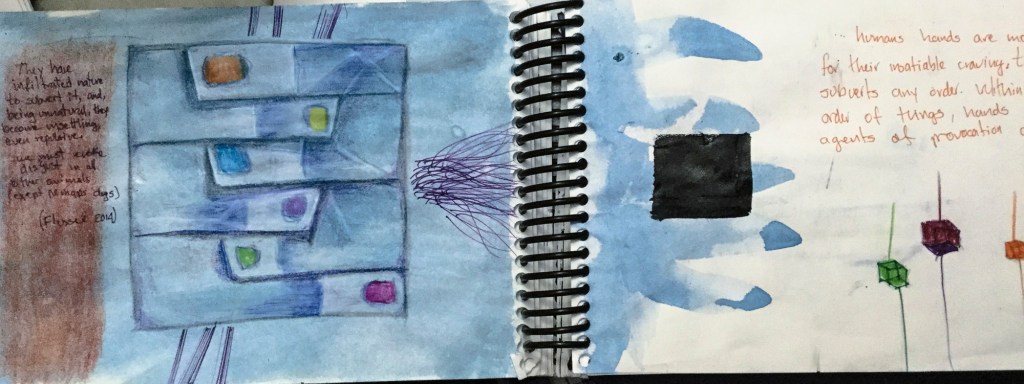
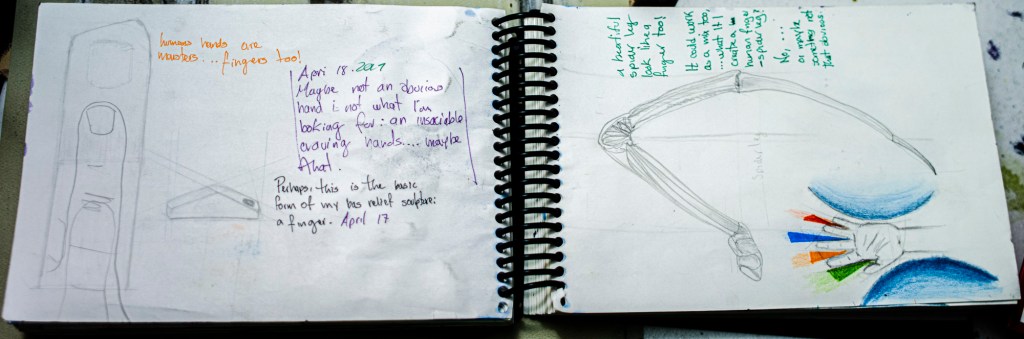
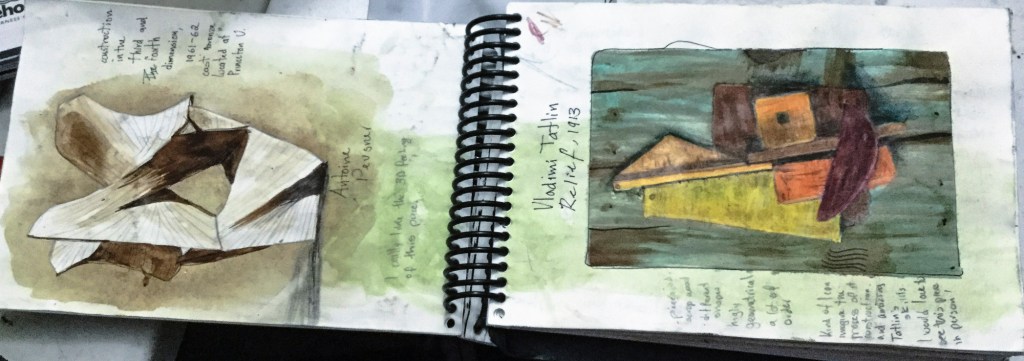
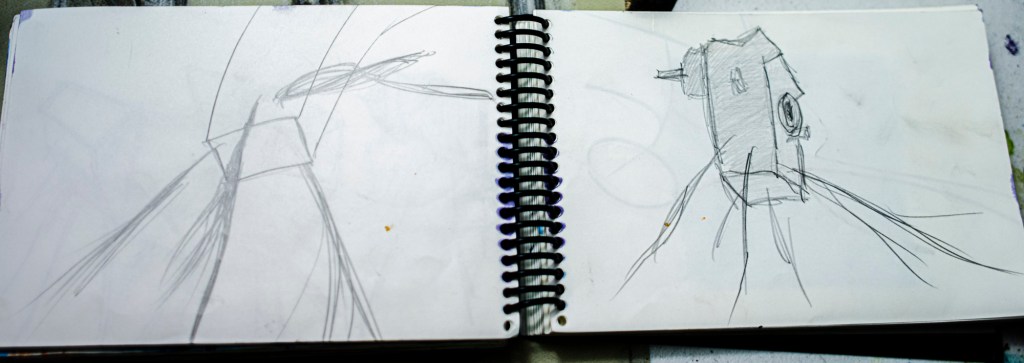
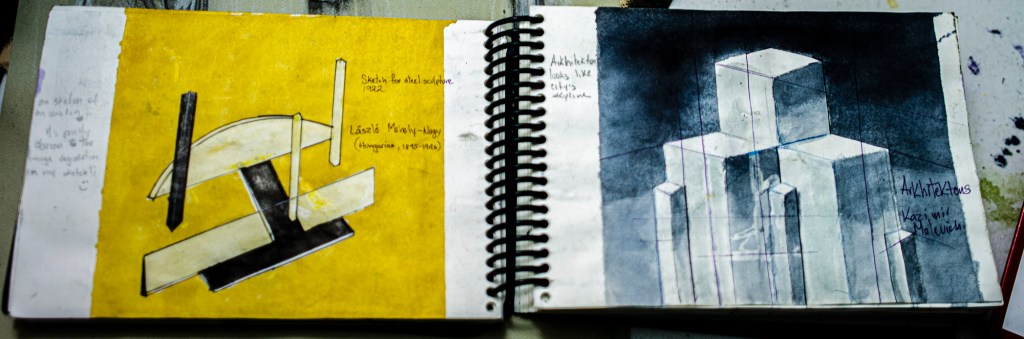
Below, relevant Pages of the first research exercise on chapter 10: Assignment – research trail of An Introduction to Studying in HE
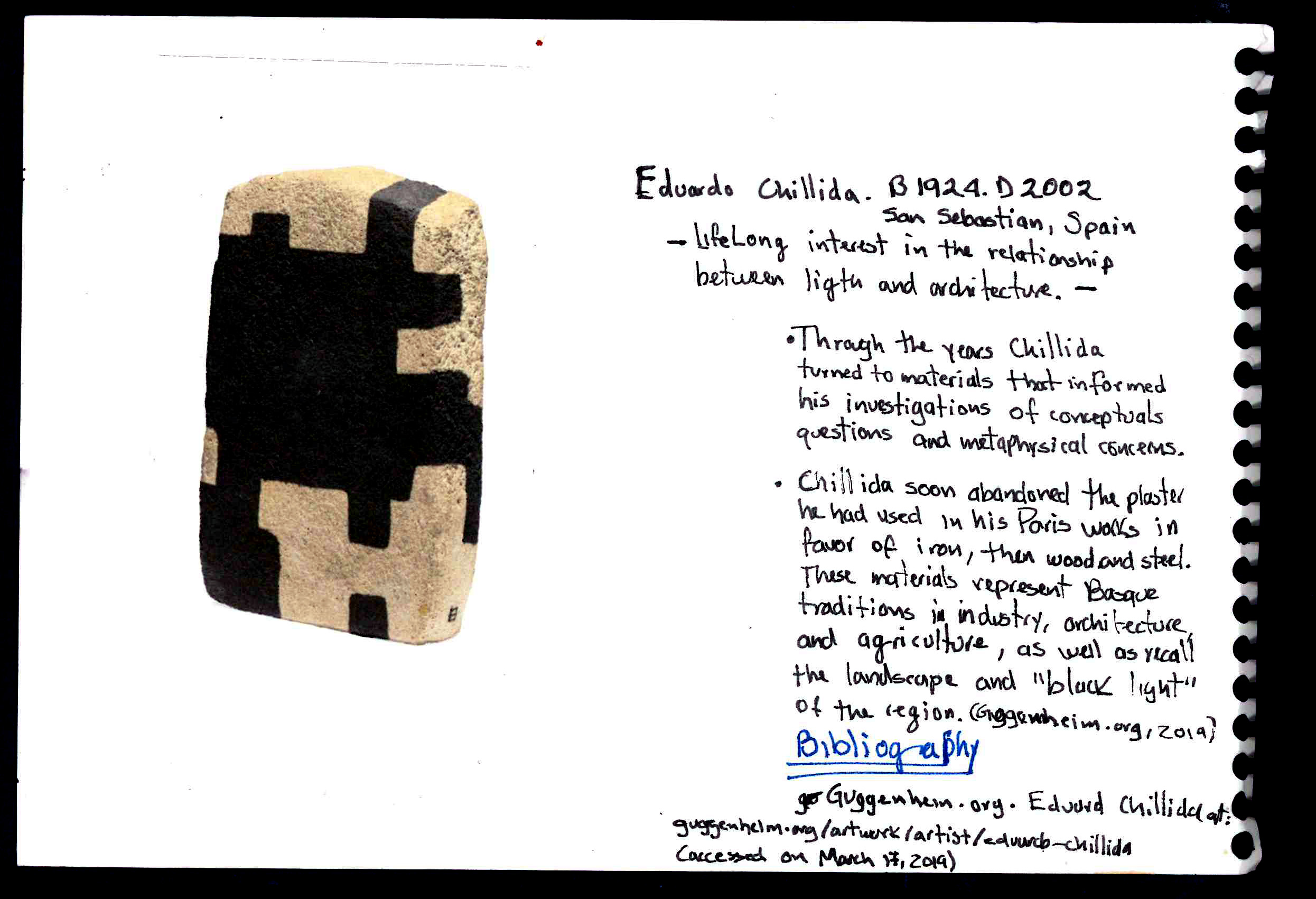
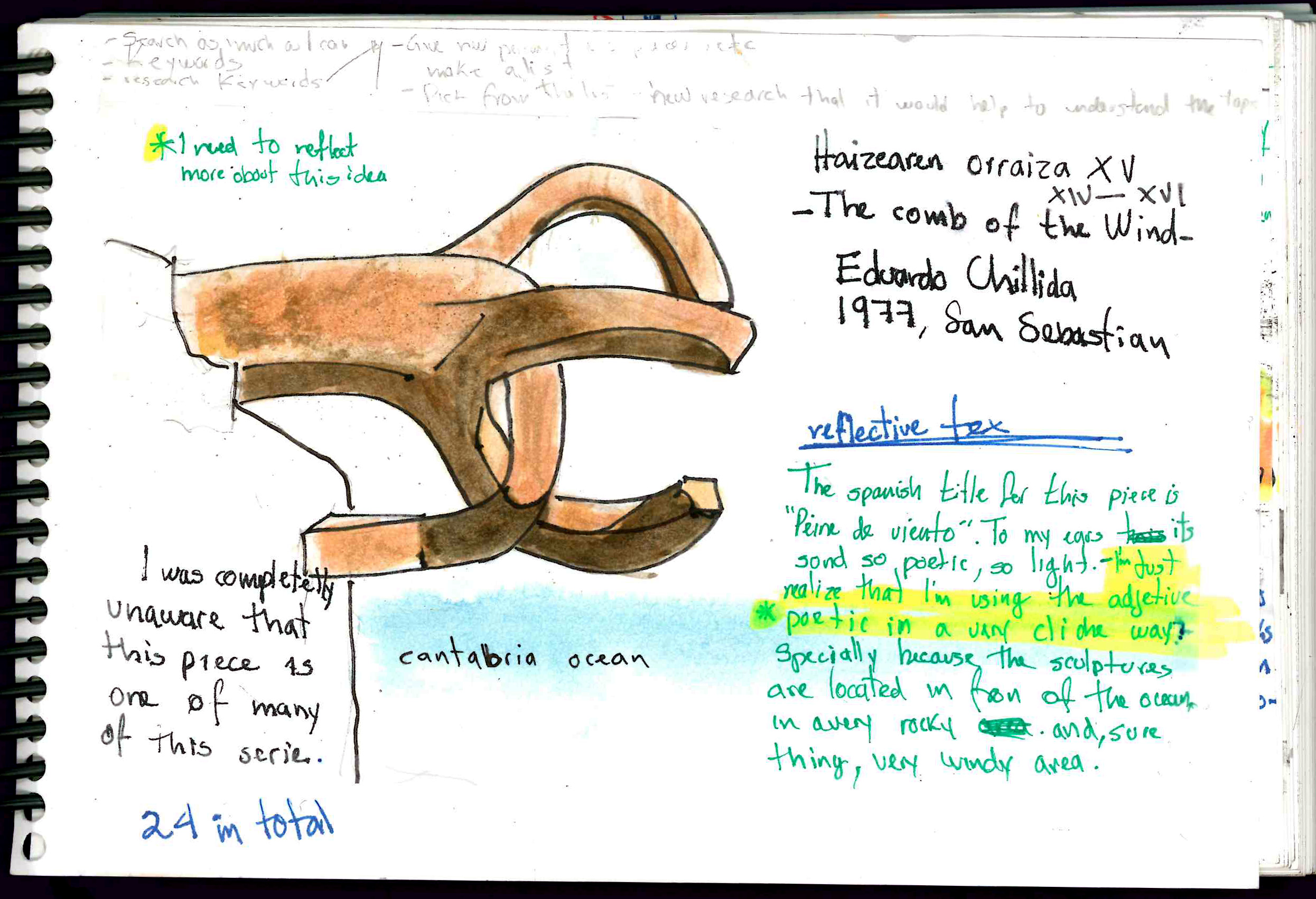
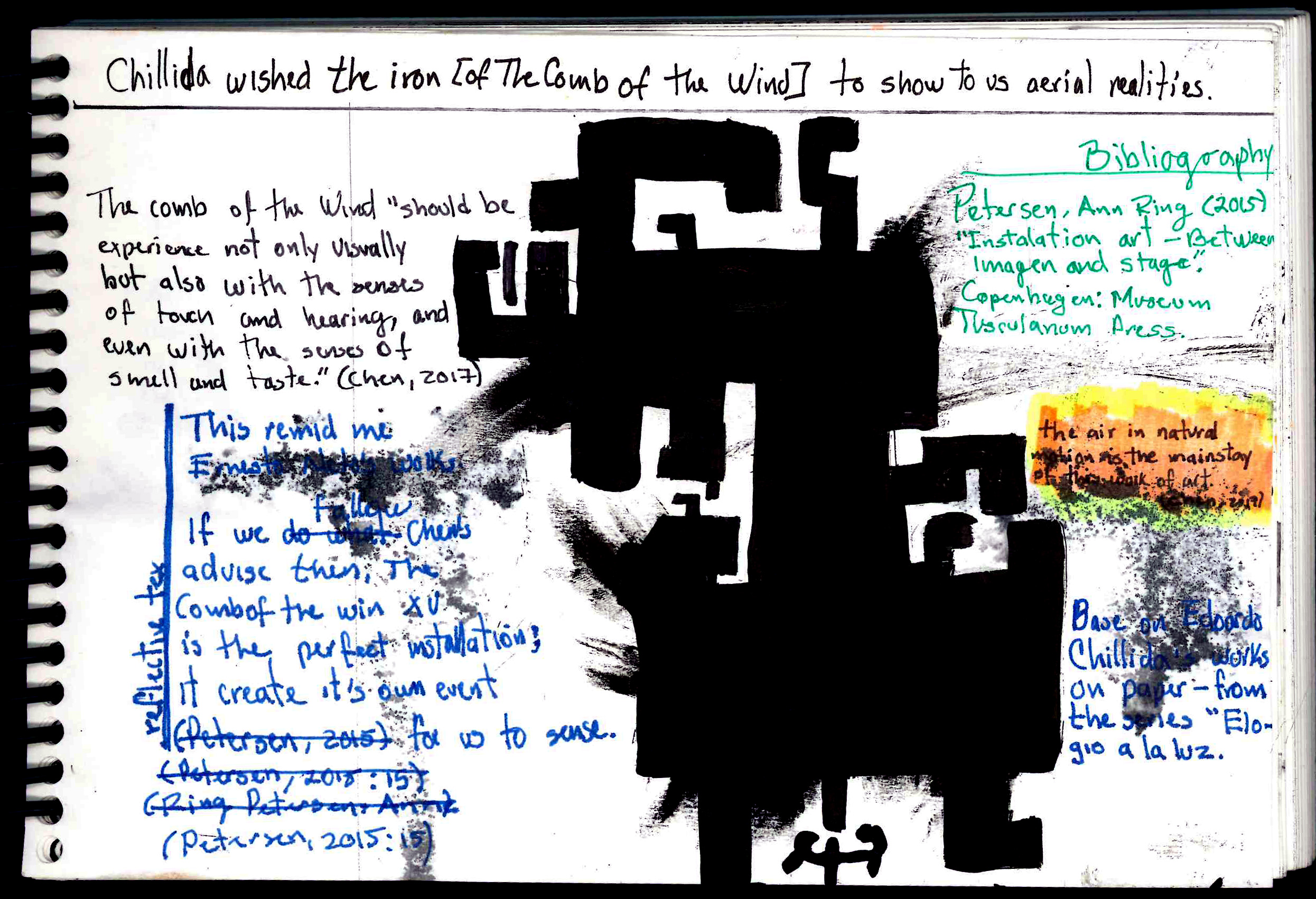
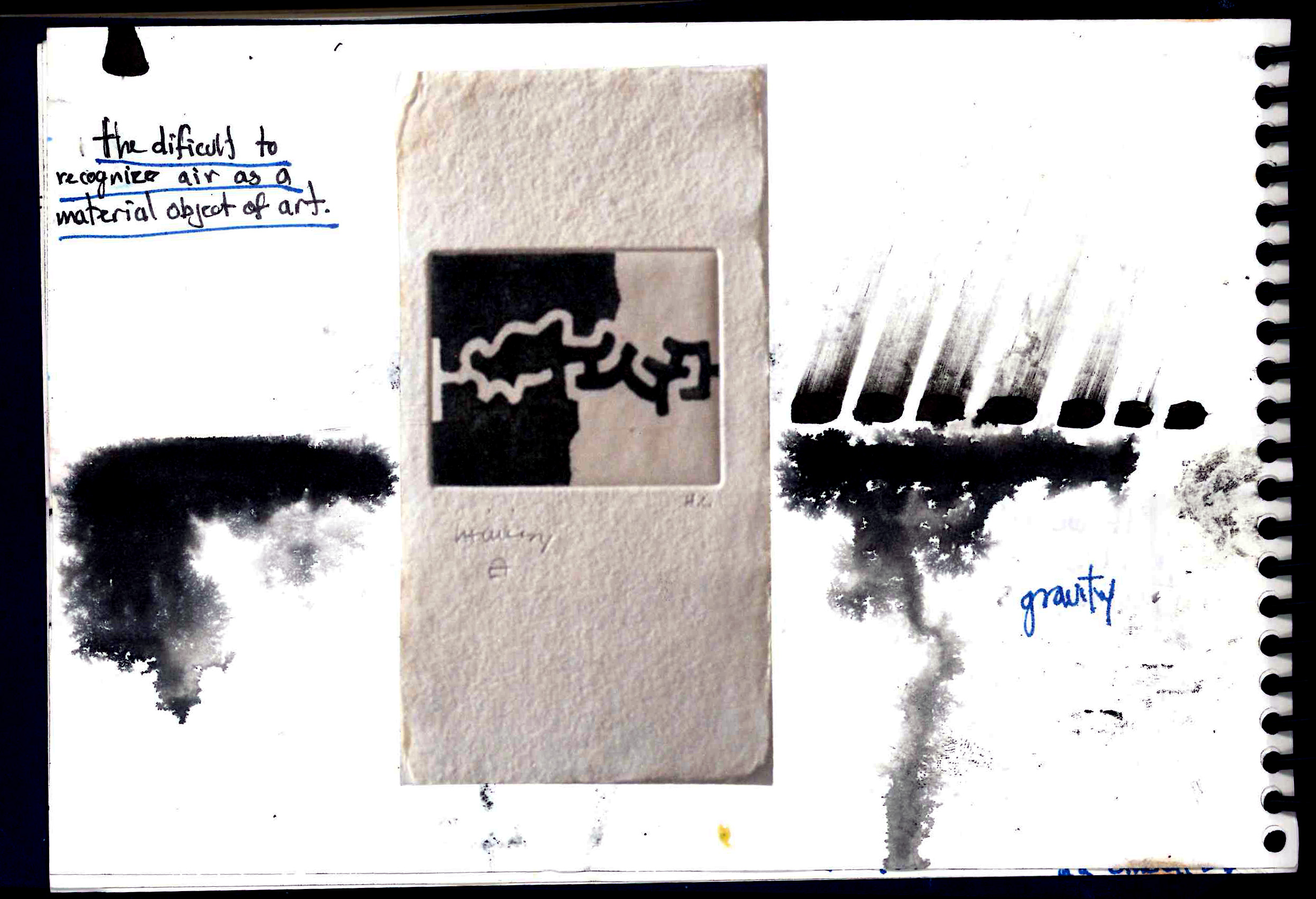
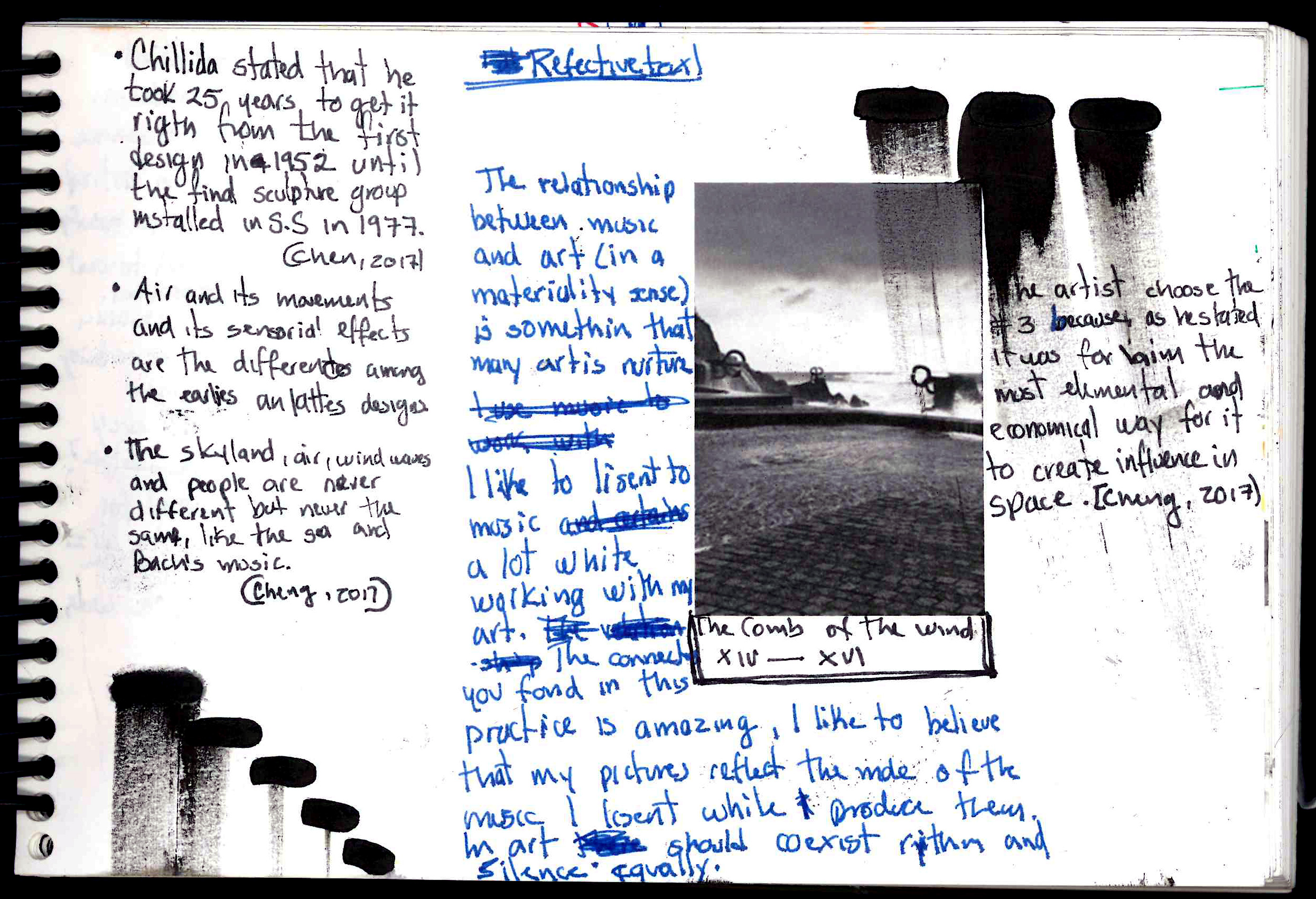
Preparatory drawings
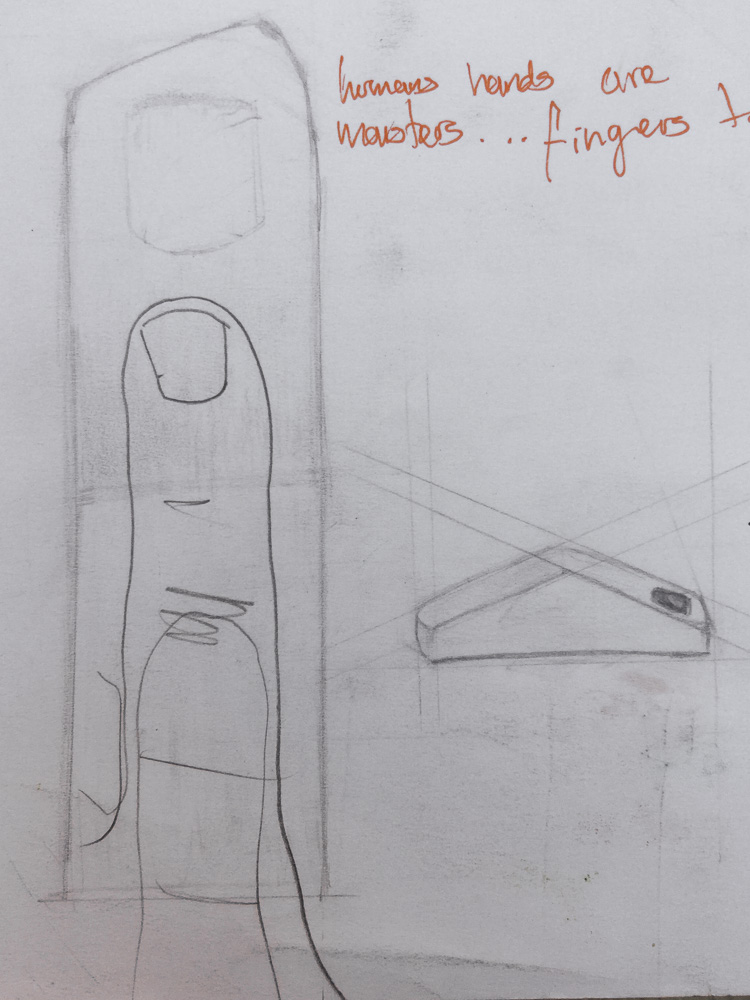
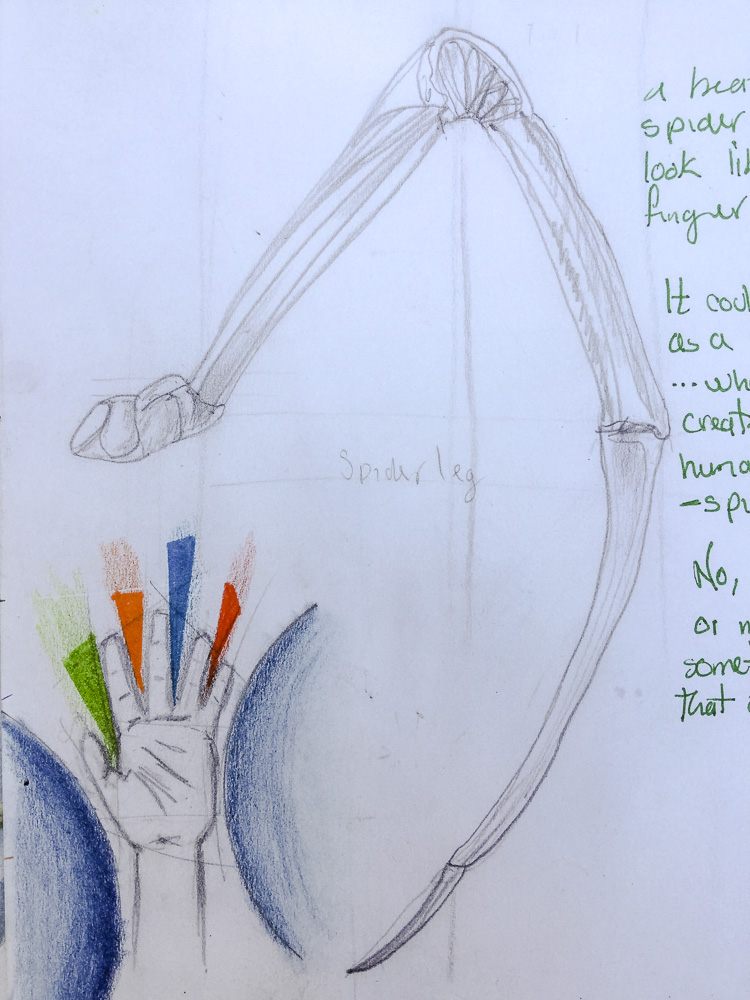
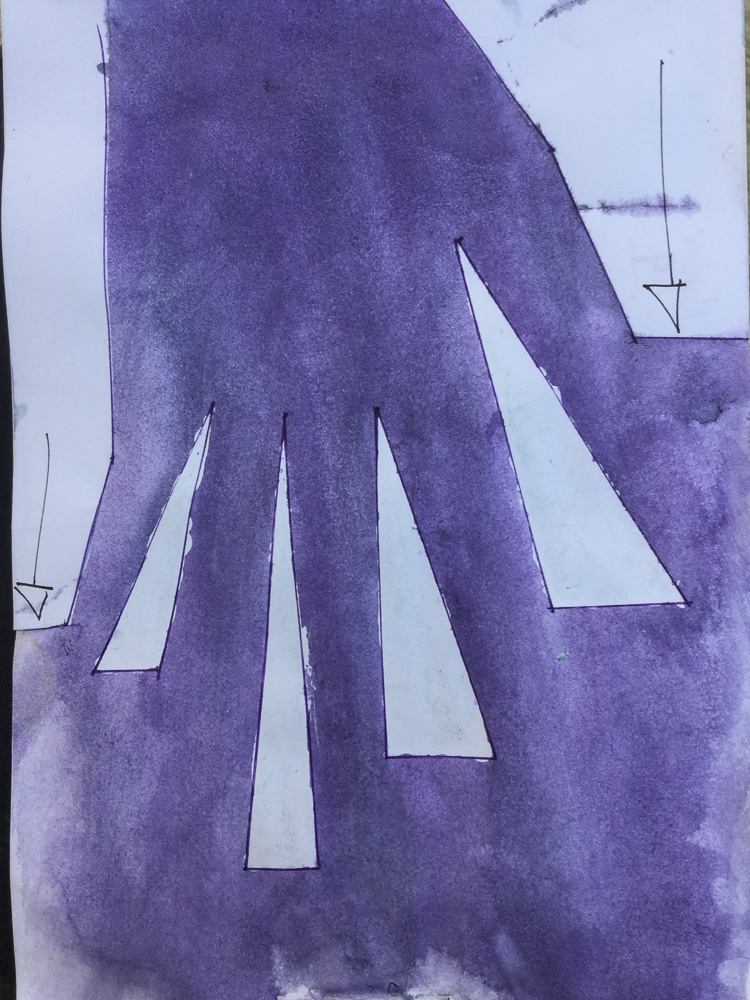
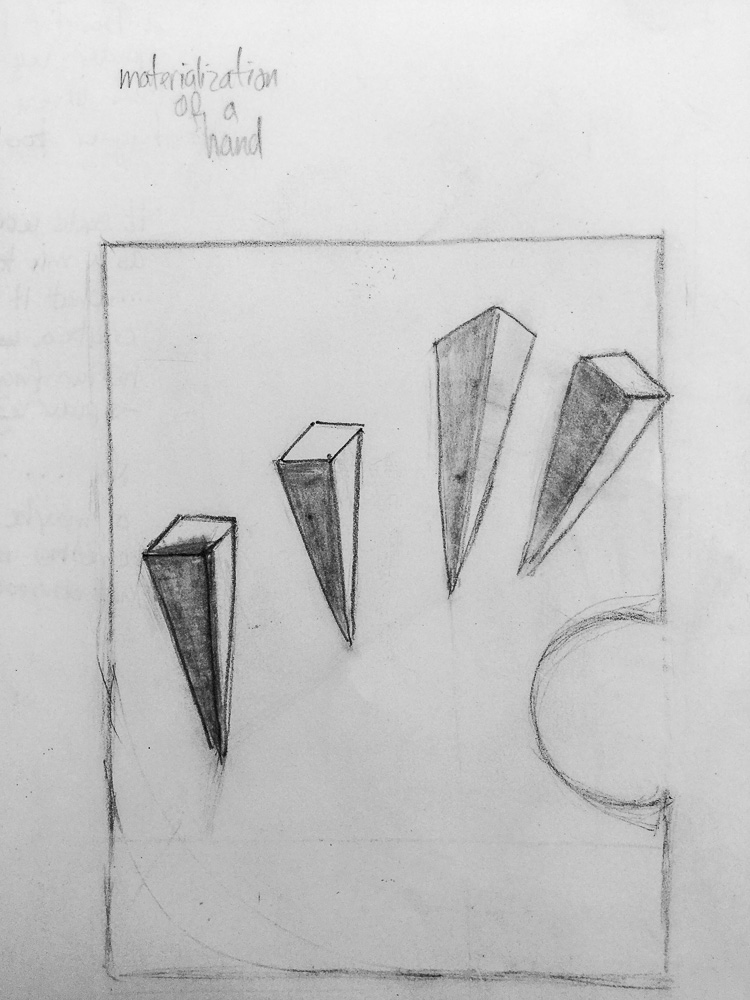
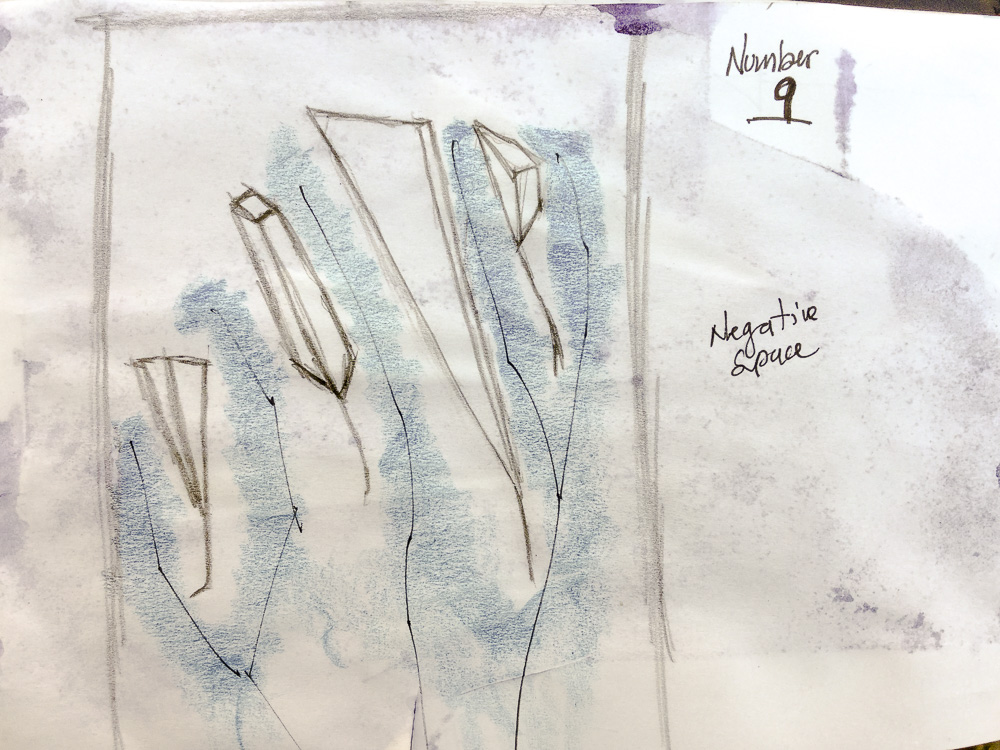
Tonal Drawings
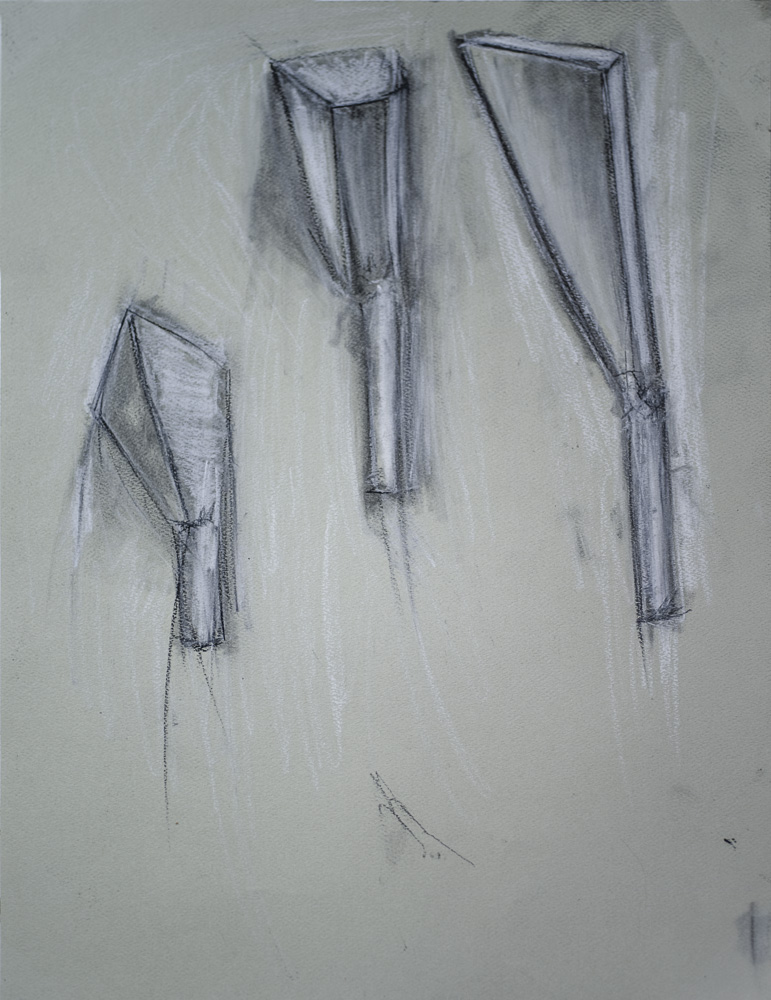
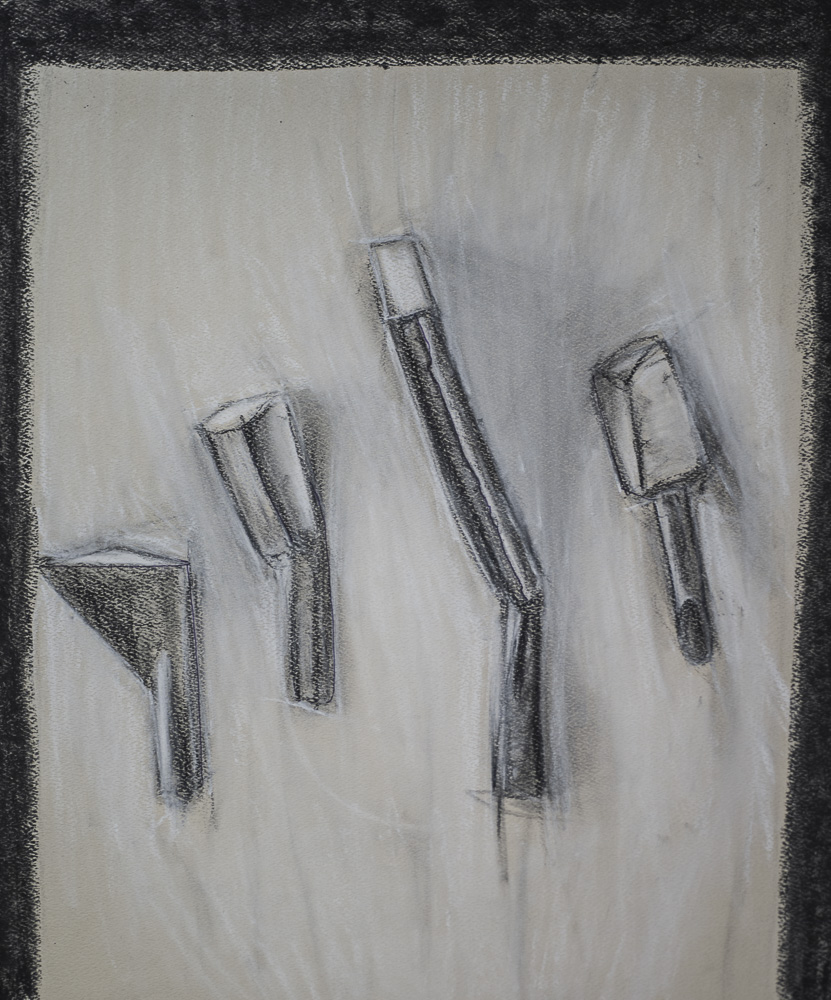
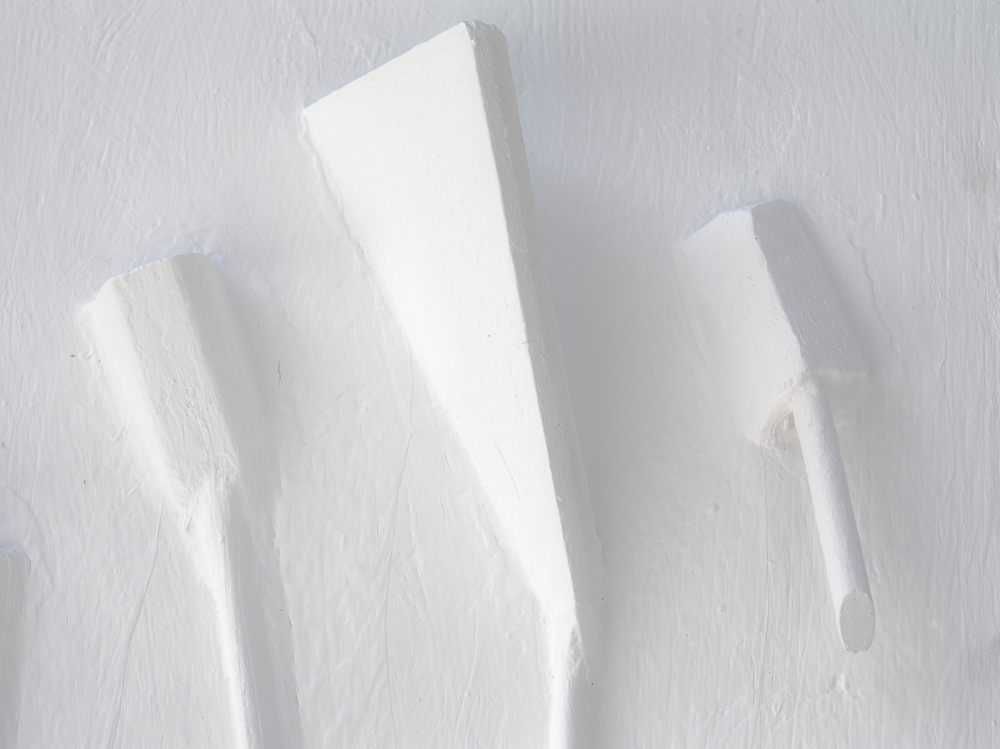
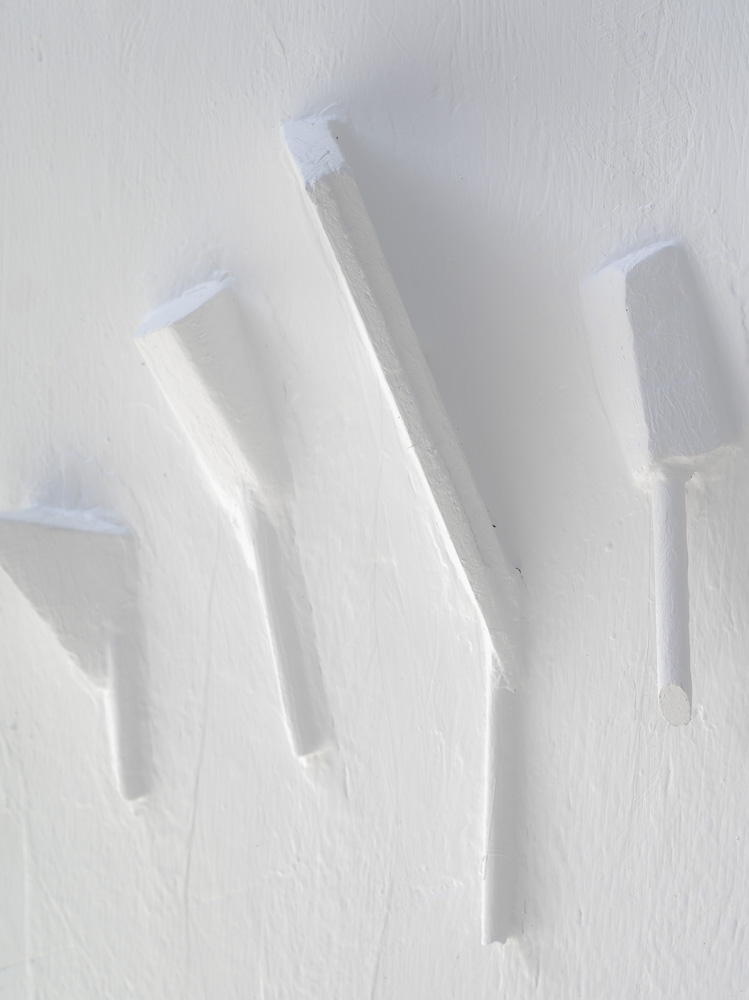
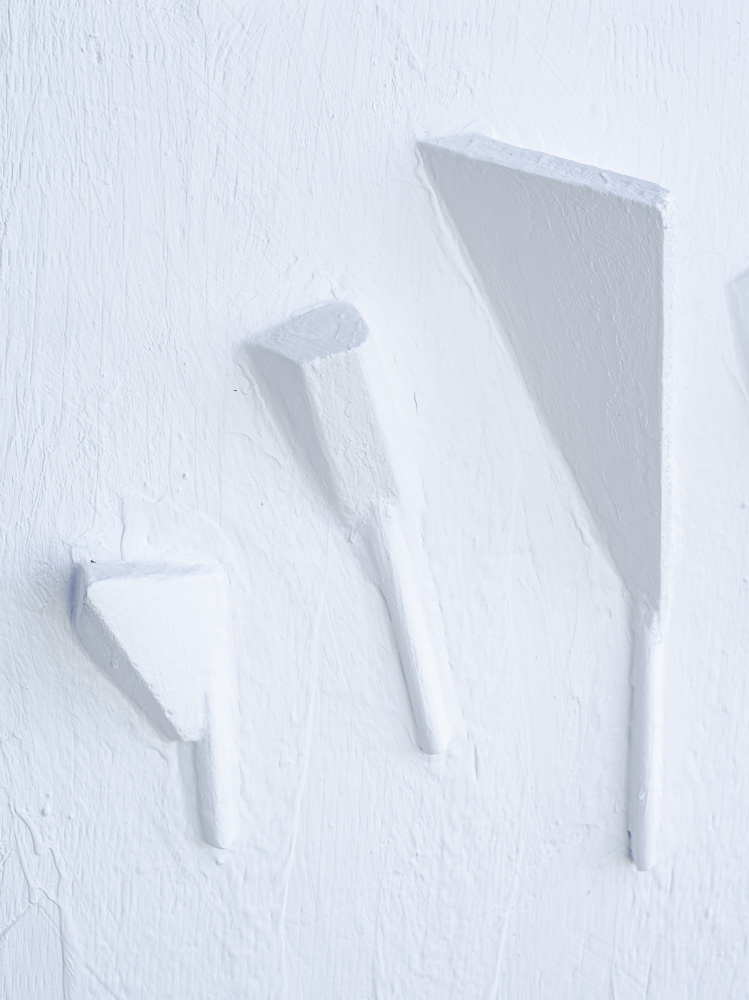
Other photographs with different light conditions
Self-assessment
How did I use a range of techniques to create a skilful and effective sculpture?’
I think one of my strengths is that I’m able to work with what I have, and that allows me to be free of preconceived rigid ideas. I found everything that I needed in the garage of my house, objects, and things were limited at first glance, but it is impressive the number of things one can keep throughout the years besides the recycling bins of for different materials: plastics, tin cans, paper, etc. Therefore constructing something out of so many rubbish we produce it was not a difficult thing. Planning, researching, and drawing, were the basis of the creation of my sculpture, along with, experimentation.
How did I use construction techniques involving a variety of media and tools?
Even though I’m not exactly a handy person, I was able to manage the construction part with decent results. My limited knowledge of materials and tool significantly increased with the creation of the two sculptures. Something that I really liked during the construction of the relief sculpture was to use of drywall to create the illusion of unity in my piece.
How I developed basic skills in drawing and used those drawing to develop my ideas
Building a sculpture having as a reference a drawing is a fascinating process: what is in the paper it is not always easy to translate into a physical object. My drawing skills are just ok and good enough for this kind of process; however, next timeI’m going to use a bigger piece of paper for my sketches.
How did I demonstrated the use of research techniques in the study of the history of sculpture and its relevance to my own work
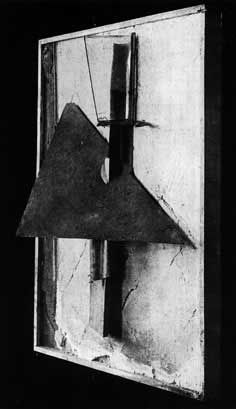
First of all, I have to say that I think my relief sculpture is totally Tatlin. The resemblance of my piece with Fig 1 depicting a relief-sculpture of Vladimir Tatlin is undeniable. Perhaps because the significant triangular element in the middle, however, the intention behind my piece is totally different from the counter relief of Tatlin.
But besides this comparison of works what I really liked was that I was able to use some of my previous research as an inspiration to build my sculptures and at the same time let myself be influenced by the work of the researched sculptors.
.
.
.
Bibliography
Hamill, Sarah (2015) David Smith in Two Dimensions: Photography and the Matter of Sculpture. California: University of California Press
List of Images
Figure 1. Counter-Relief (Material Combination),” (1914) [Sculpture] At: https://www.artbook.com/blog-at-first-sight-tatlin.html (Accessed on 05.15.19)
 Omar Reyna's Log- Sculpture 1: Starting out in 3D